Dinosaur Park, Rapid City, South Dakota
A Black Hills Landmark and WPA Masterpiece
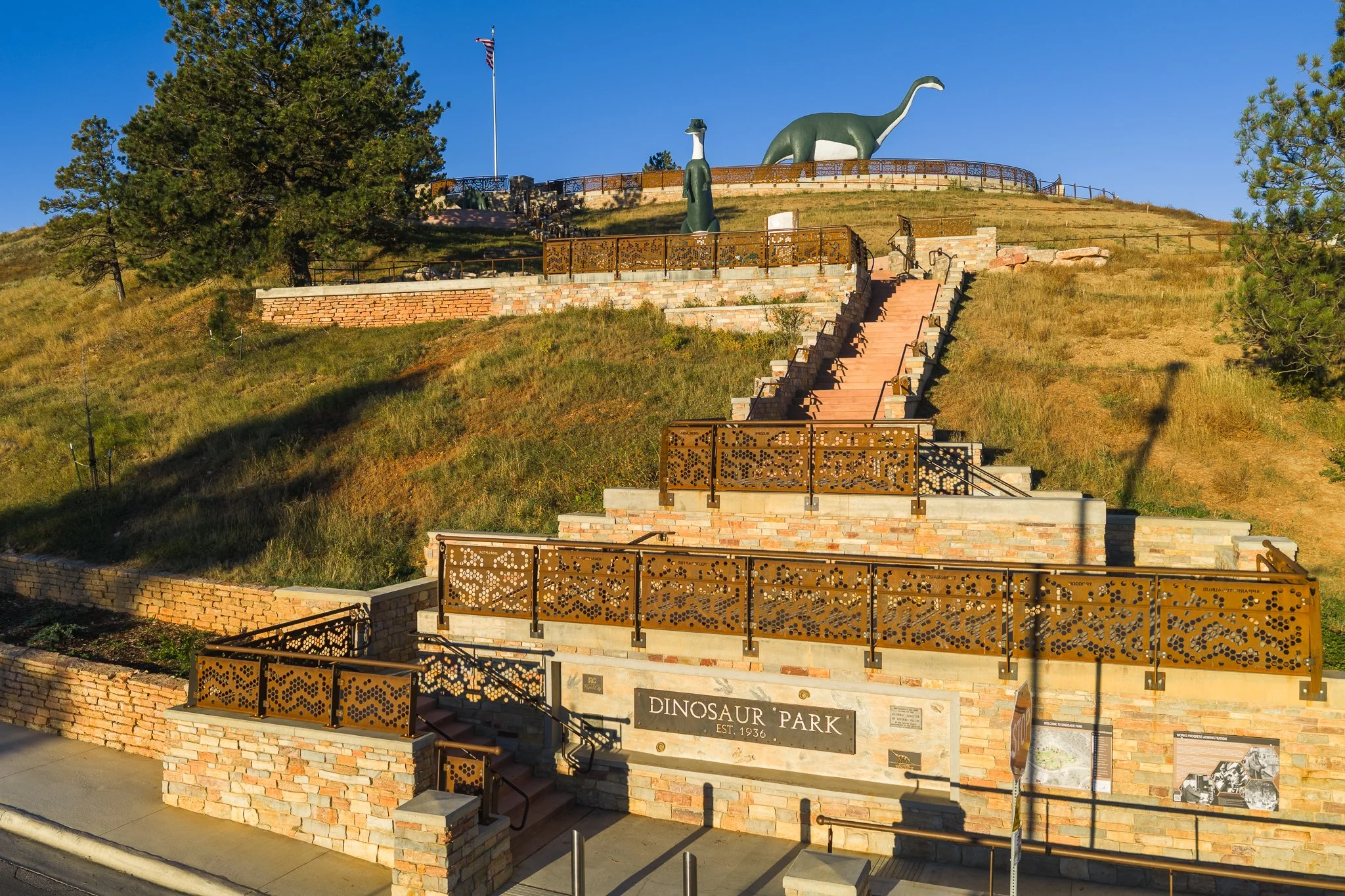
Dinosaur Park stands above Rapid City as one of the original and most historically significant tourist attractions in the Black Hills, conceived in the mid-1930s to capitalize on the emerging popularity of Mount Rushmore. The Rapid City Chamber of Commerce donated the land—historically known as Hangman’s Hill and the project was funded through the federal Works Progress Administration (WPA).
Original Construction and Design
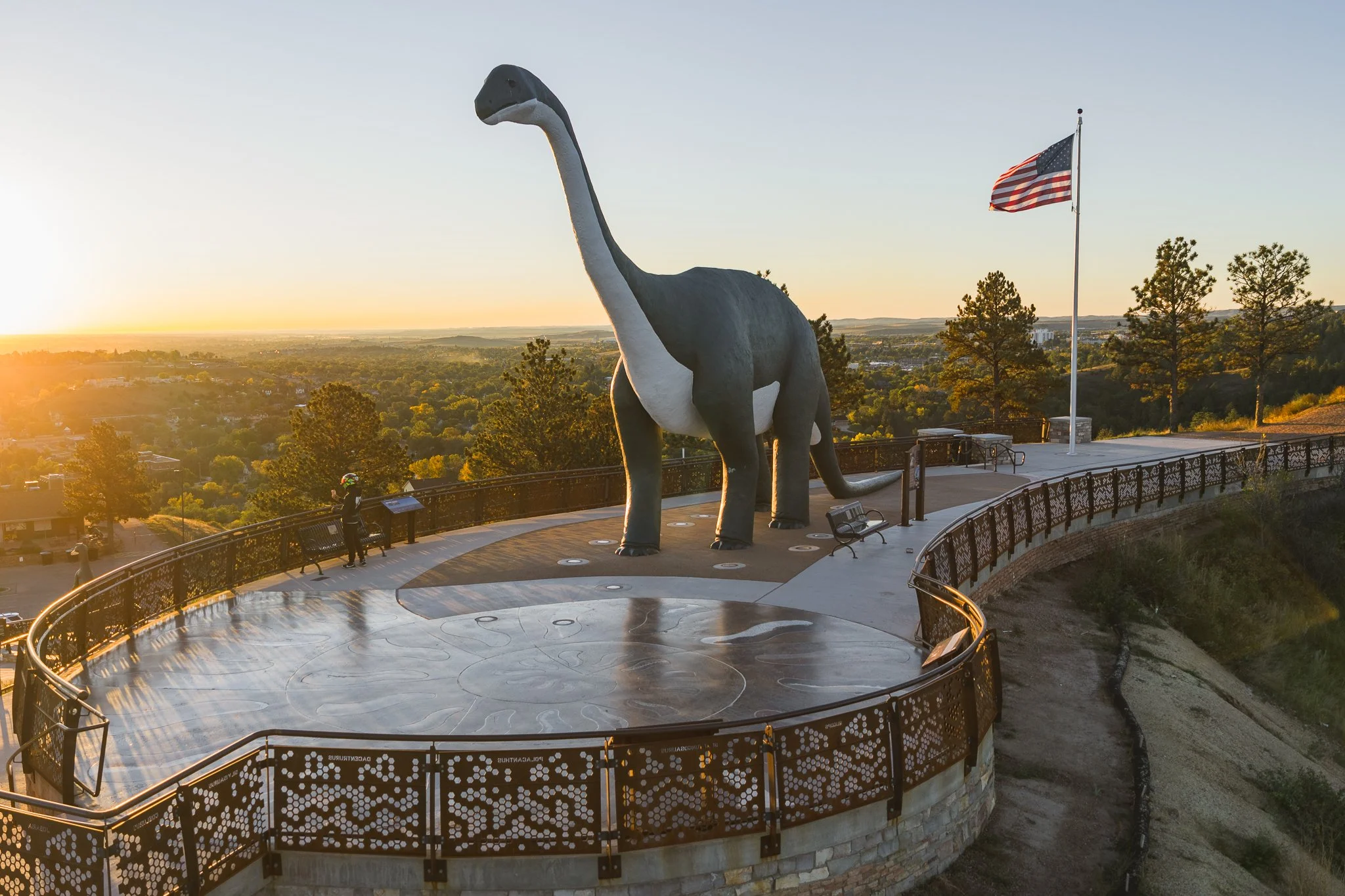
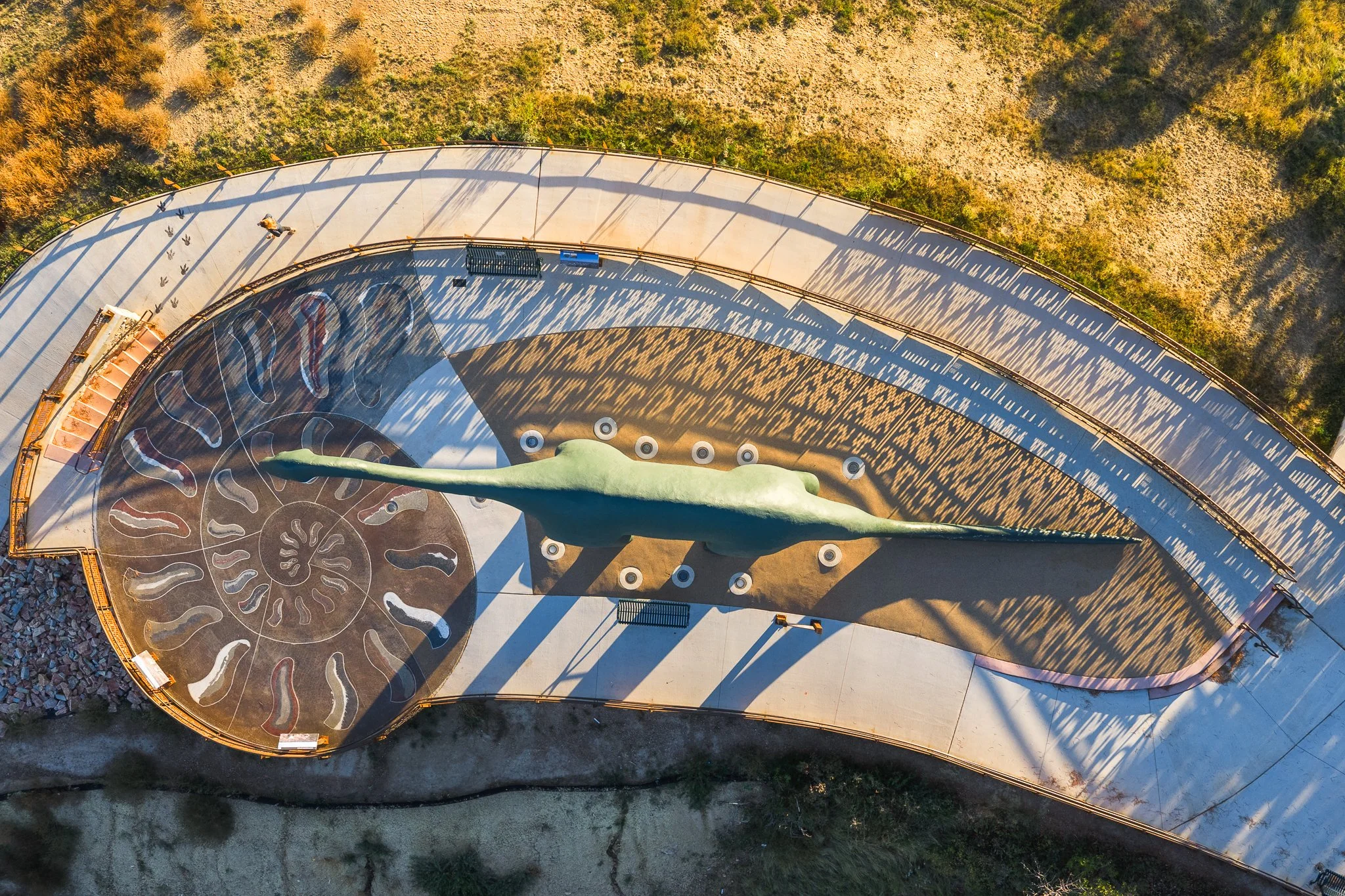
Construction began in March 1936 under the direction of artist Emmet Sullivan (a real character), who was commissioned to create five concrete dinosaur sculptures: the Apatosaurus, Tyrannosaurus Rex, Triceratops, Stegosaurus, and Trachodon. The project was dedicated on June 1, 1937. Sullivan developed a unique, durable construction system, anchoring the framework with two-inch black pipe embedded in concrete and then building the bodies using rebar, mesh, and concrete. The park’s creation is a celebrated example of Depression-era public works, providing employment and leaving a lasting legacy. Sullivan later expanded the display in 1958 with the addition of the Dimetrodon and Protoceratops.
Historical Significance and Context
The park’s location offers dramatic views of Rapid City, the surrounding Black Hills geology, (squint and you can see the Badlands and Black Elk), and sits on the route of the scenic Skyline Drive. A popular spot throughout the last 80 years, historic photographs document it's many transformations as a destination that has gone in and out of favor. Recognizing its importance as a surviving example of New Deal public art and engineering, Dinosaur Park was officially placed on the National Register of Historic Places in 1990.
Preservation and Accessibility
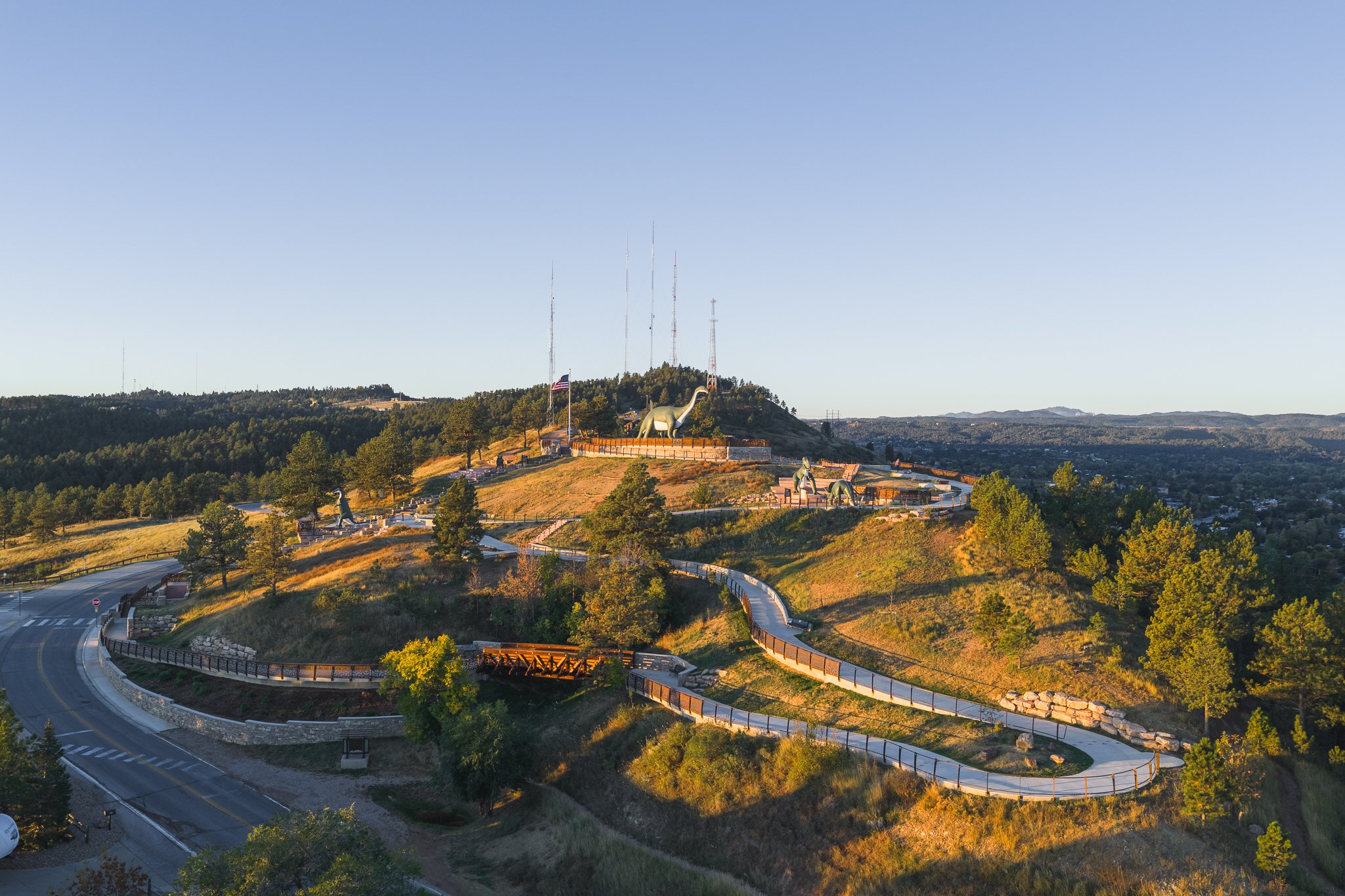
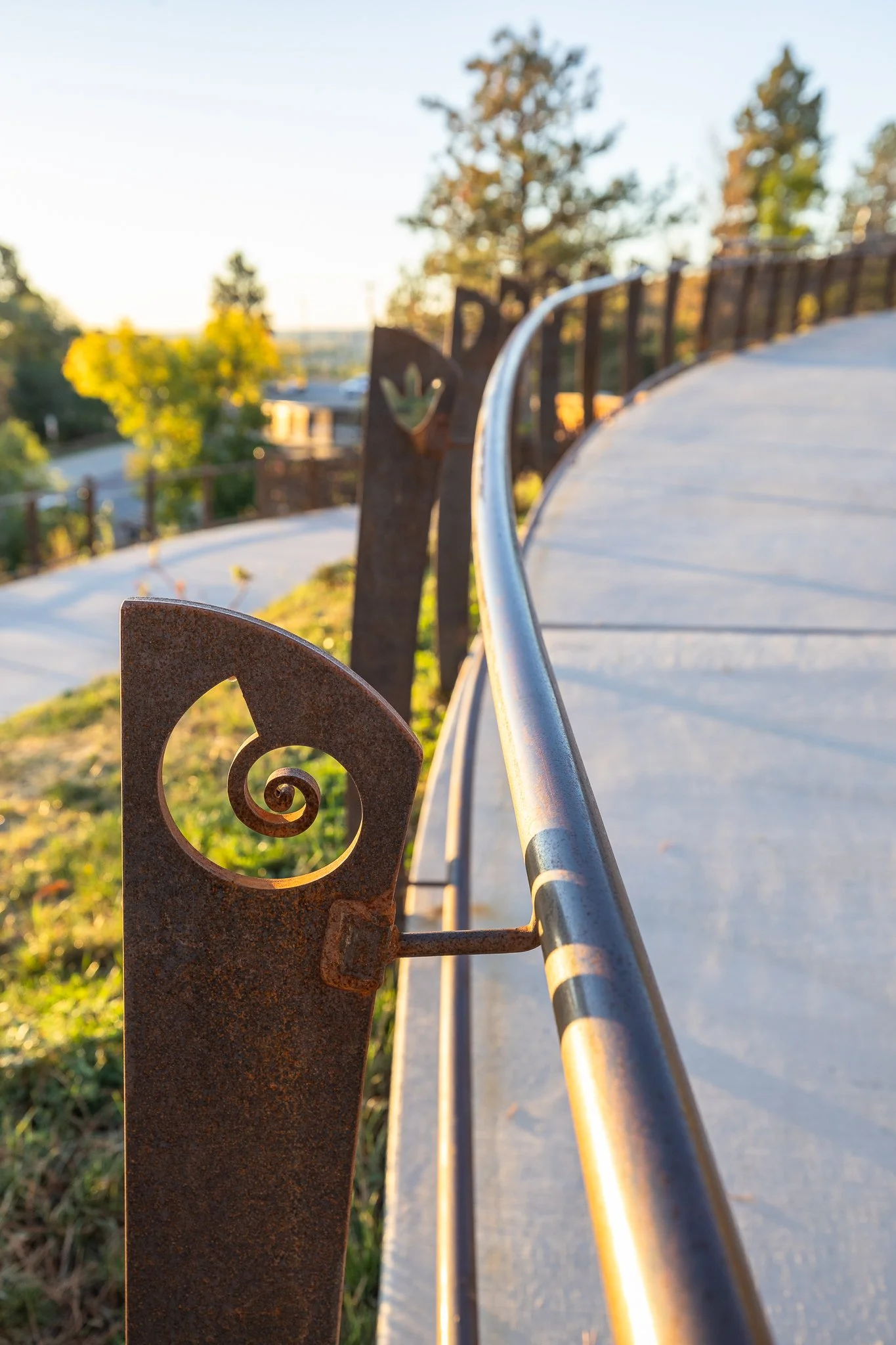
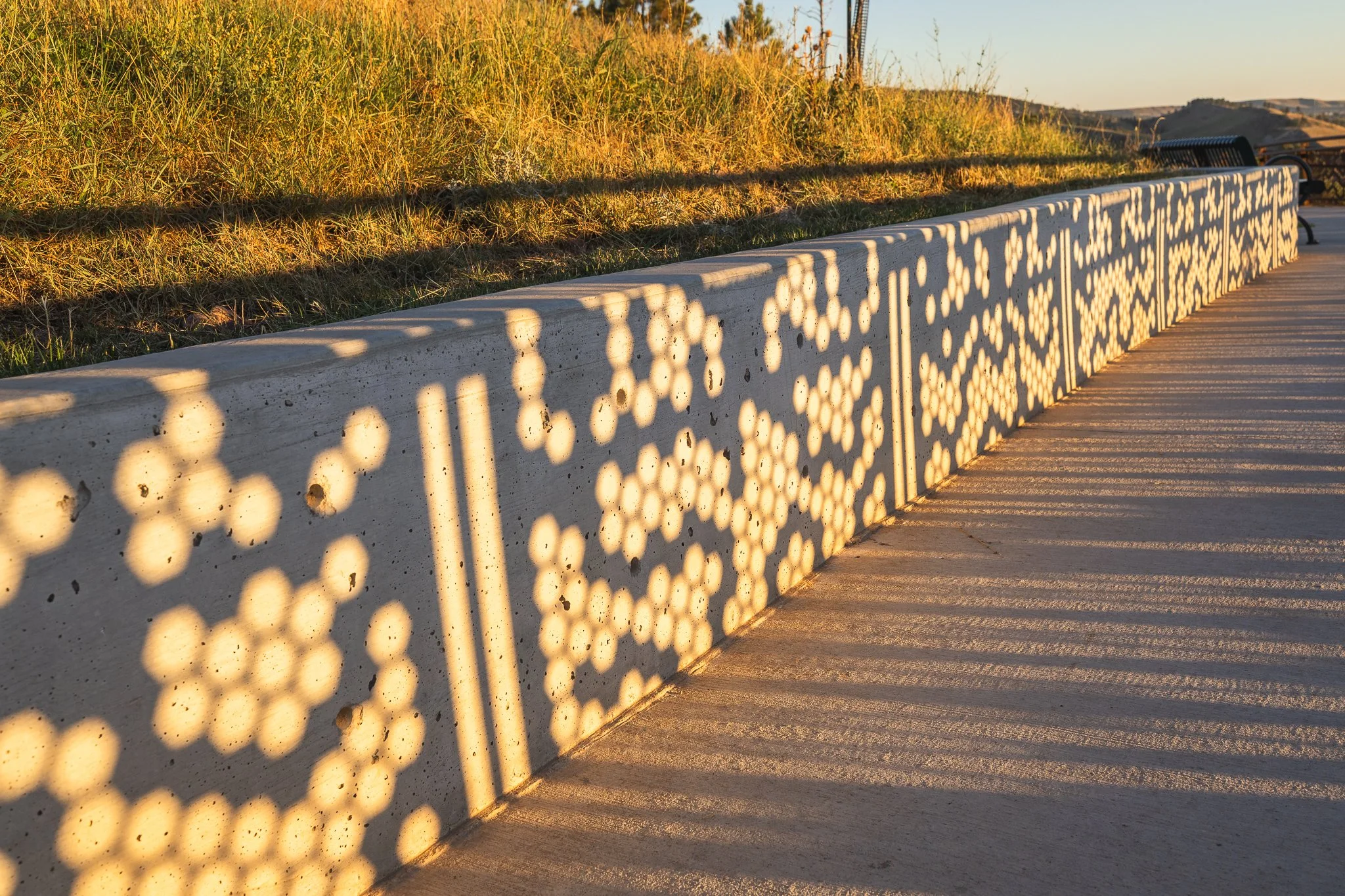
Tallgrass served as the prime designer for the recent accessibility upgrades, completing the design with the help of friends at Albertson Engineering, AE2S, and Skyline Engineering. We focused on modernizing the visitor experience while meticulously preserving the historical integrity of the WPA-era landmark. This involved designing an accessible route that climbs over 70 vertical feet, offering an enjoyable walk with overlooks, interpretive signs we created, a variety of great views of the surrounding area, and, of course, the historic sculptures. Our work ensures that this unique piece of American history and public art remains accessible and enjoyable for all visitors today and for future generations.
The Rapid City Parks and Recreation department oversaw the process, from the original glimmer of an idea that bubbled up during the Skyline Trailheads project in the mid-20-teens, through a full Master Plan, Concept Design, and a long wait for funding. In 2021, an RFP for the final design was issued, and we were lucky to get to continue the work. Since then, it has been a constant design, bid, and years of construction by a great crew from MAC Construction, who managed the construction in the midst of two busy summer tourist seasons. It’s now finally complete! We love to see the park in full use, and are happy to hear joyful reports from many folks who have never gotten to go to the top before.